Care & Maintainance of your Wing Foiling Board
Extend the Lifespan of your Board
Proper care and regular maintenance help keep your Wing Foiling Board in top condition and extend its lifespan. Cleaning your Board after each session, checking it regularly for signs of damage and storing it correctly can help prevent unnecessary wear and maintain its performance.
Explore our Board care and maintenance guides for practical tips on cleaning, inspecting, protecting and storing your Board, so it stays ready for your next session.
Table of Content
How do I best care for my wing foil board?
Proper care and maintenance of your wing foil board are essential to maintain performance and ensure maximum lifespan of the material. Here is a summary of the most important measures.
Protection at the Beach
Sun Exposure: Avoid leaving your board on the beach or in direct sunlight for unnecessarily long periods.
Surface: When placing the board down, watch out for shells, stones, and other sharp objects that could damage the outer shell.
Cleaning After the Session
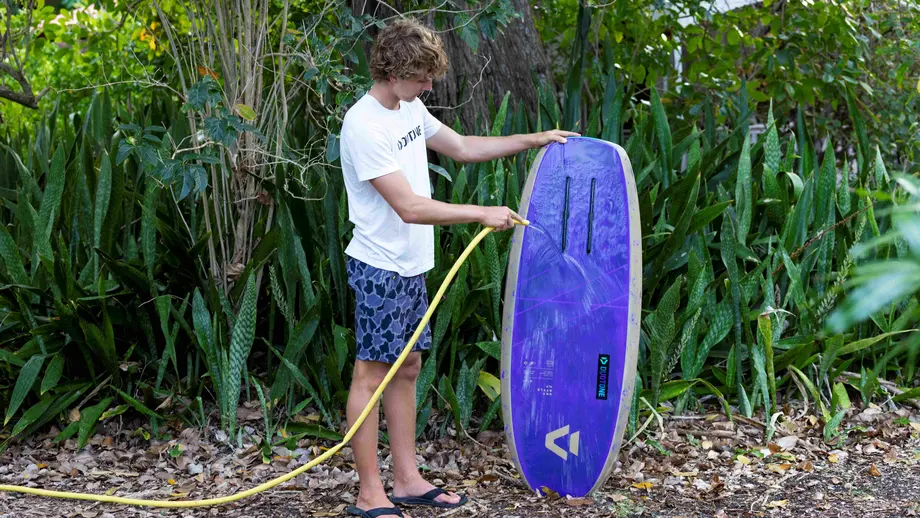
Fresh Water: Thoroughly rinse the board with fresh water after every use to remove salt, sand, and dirt.
Cleaning Agents: For stubborn dirt, use a mild soap solution.
Caution: Never use harsh chemicals or abrasive cleaners, as these can permanently damage the surface.

Storage and Transport
Drying: Always dry the board completely before packing it in a board bag—this also applies to storage in a car during the season.
Environment: Store your equipment in a cool, dry place out of direct sunlight.
Temperatures: Avoid locations with extreme heat, cold, or high humidity to prevent material fatigue.
Inspection and Professional Maintenance
Regular Checks: Regularly inspect the board for signs of damage such as cracks, dents, or delamination (layers peeling apart).
Professional Service: Take your board to a specialist regularly for a thorough inspection. A professional can identify potential problems early and take necessary preventive measures.
Repair Notes
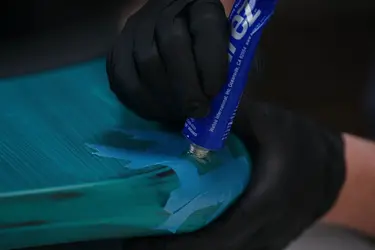
DIY Repairs: You can carry out minor touch-ups yourself using the appropriate instructions.
Professional Repair: For severe damage, such as large cracks or deep dents, you should always consult a professional workshop. Improper repair attempts on major damage can further damage the board.
How do I best care for the footstraps on my wing foil board?
Proper care of your footstraps is essential for safety and control on your board. Here are the most important maintenance tips.
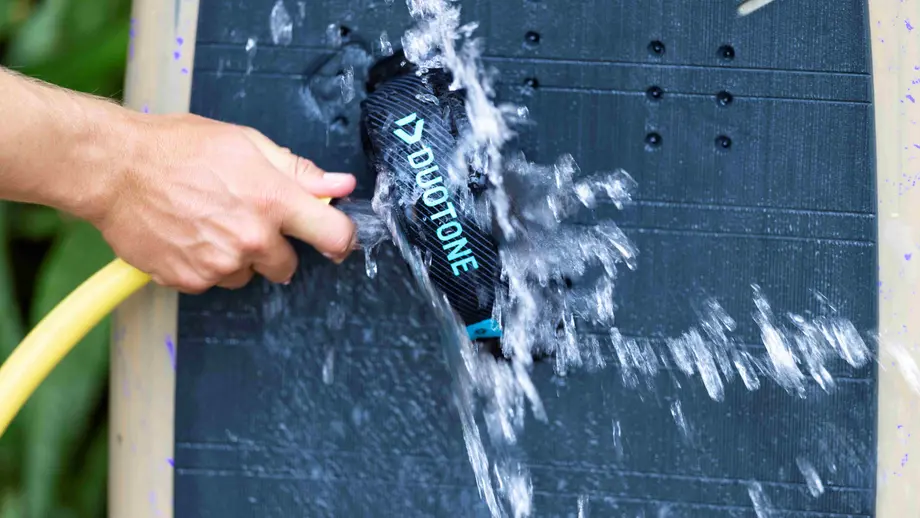
Regular Inspection: Check the overall condition, tightness, and screws of the footstraps regularly.
Cleaning: Rinse the straps thoroughly with fresh water after every session.
Replacement: Replace worn‑out or damaged footstraps immediately.
Adjustment: Make sure the straps are adjusted to your preferred position to ensure maximum comfort and full control while riding.
Important Safety & Liability Notice
Before you start any repair, make sure you carefully assess whether you are able to carry it out properly. If your product is still under warranty, performing repairs on your own may void the warranty for the affected damage.
Our guides and videos are created to the best of our knowledge. However, they may not cover every detail or specific situation. We do not accept liability for any damage resulting from the use of incorrect or misunderstood instructions.