Care & Maintainance of your Foil
Extend the Lifespan of your Duotone Foil
Proper Foil care is essential to maintain performance and extend the lifespan of your equipment. Regular cleaning, inspection and correct storage help protect your Foil from corrosion, unnecessary wear and potential damage.
Whether you ride in salt or fresh water, a simple maintenance routine can make a real difference. Explore our Foil Care guides to learn how to clean, inspect and store your Foil correctly, take care of individual components and keep your Gear ready for your next session.
Table of Content
How do I best care for my foil?
Optimal care and maintenance of your foil is essential for material longevity and trouble-free performance. Here are the most important recommendations for handling your equipment.
Transport: Consistently use foil covers for transport and storage to protect the material from impacts.
Caution at the Beach: When setting the foil down, watch out for shells or sharp objects that could damage the laminate.
Disassembly: Do not leave the foil assembled for an extended period of time.

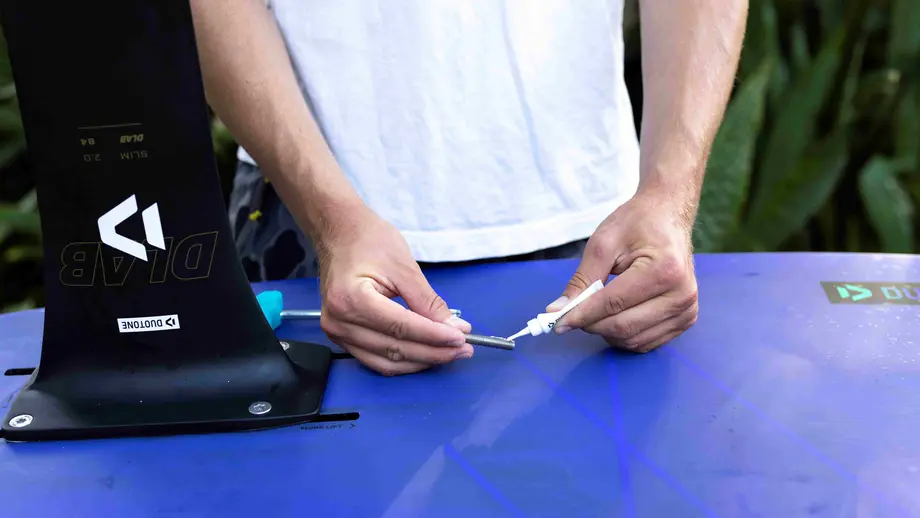
Screw Maintenance: Regularly apply specialized screw grease to all screws to prevent corrosion and seizing.
Cleaning: Thoroughly rinse the entire foil with cold fresh water after every session.
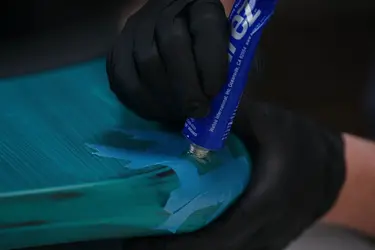
Repair: Deep scratches or damage to the laminate should be promptly sealed with epoxy resin.
Sanding a foil: How do I sand my foil and what are the advantages?
Sanding a foil can improve performance but should only be considered after thorough cleaning and degreasing (e.g., removing sunscreen residue). Sanding can improve performance, but should only be considered after thoroughly cleaning the foil, trailing edge, and mast (e.g., removing sunscreen residue) and another test ride, as many riding problems can also be caused by dirt or grease residue.
Benefits of Sanding:
Noise Reduction: A whistling sound at high speeds is usually caused by an uneven trailing edge, often on the back wing. Carefully sharpening this edge provides a remedy.
Prevention of Ventilation: Fine sanding with 800-grit sandpaper or higher creates a hydrophilic surface. This ensures that the water flow adheres better, increasing stability—especially at speeds over 25 knots.
Smooth Surface: Small imperfections are removed, which reduces water resistance.
Instructions: How to Sand Correctly
Preparation: Completely clean and degrease the wings, trailing edge, and mast.
Material: Use only wet sandpaper with a grit of 800 or higher.
Technique: Work with plenty of water and perform steady, controlled movements.
Care: Proceed cautiously, as sloppy workmanship can worsen the handling characteristics.

How do I best care for the foil box on my board?
The foil box is one of the most heavily stressed components of your board and requires regular maintenance to ensure a tight and secure connection to the foil. Here are the most important steps for caring for your foil box.
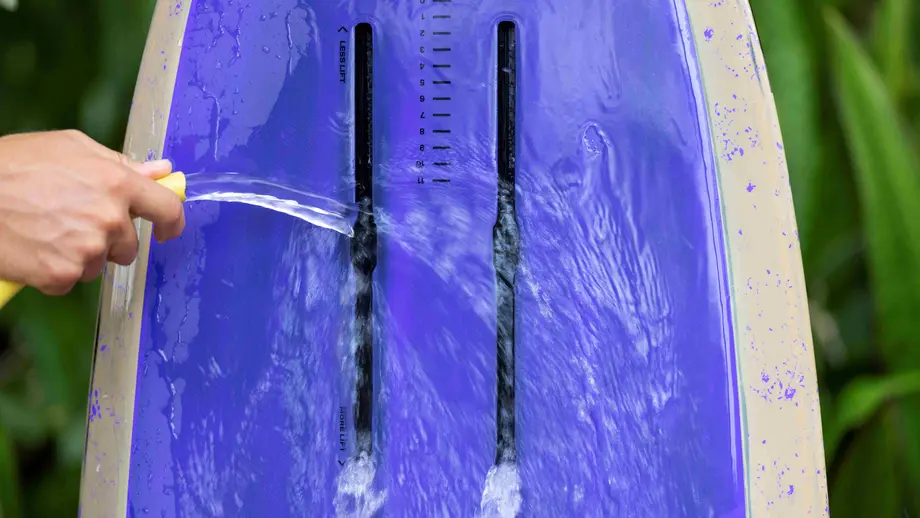
Regular Cleaning: Thoroughly rinse the foil box with fresh water after every session. This is essential to remove salt deposits and sand that could attack the material or affect the fit.
Thorough Inspection: Regularly check the box for hairline cracks, deformations, or signs of wear. Pay close attention to whether the foil has unusual play or sits loosely.
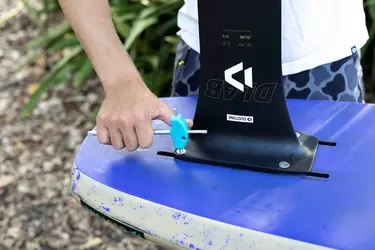
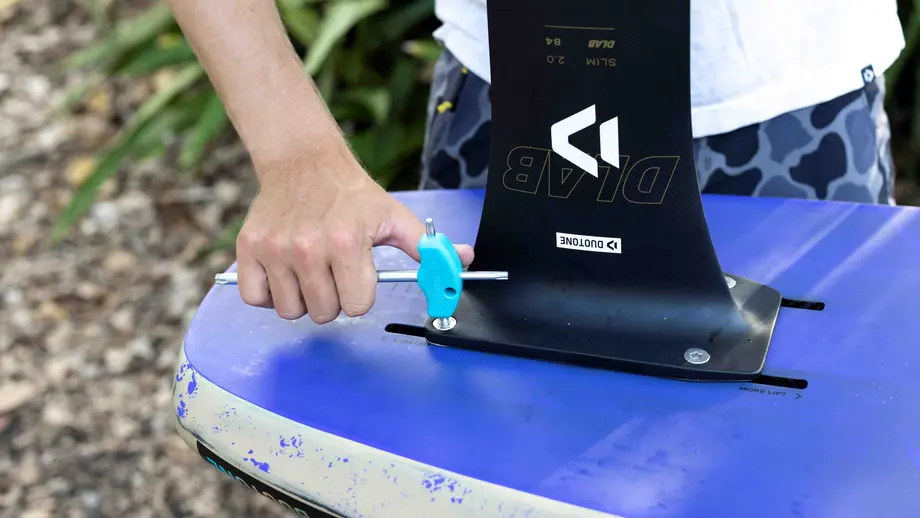
Secure Bolt Check: Before every session, make sure that the bolts are seated firmly. However, never tighten them with excessive force to avoid damaging the box or the threads.
Check for Watertightness: For boards with a foam core, it is particularly important that the box remains watertight, as water ingress leads to weight gain and loss of performance. If cracks or gaps appear in the area of the box, they must be sealed immediately with the appropriate resin (epoxy or polyester, depending on the core material).
If the foil box is loose or shows major damage, we strongly recommend having the repair performed by a professional repair shop
Sanding a foil mast: How do I sand the mast and what are the benefits?
The mast is one of the most hydrodynamically important components of your foil. A precise finish often improves smoothness and speed more significantly than optimizations to the wings themselves.
Why Sand the Mast? Uneven water flow or water beading on the mast leads to flow separation and ventilation. During this process, air travels from the surface down along the mast, which massively disrupts stability. The upper third of the mast is particularly vulnerable, as it frequently comes into contact with air.
Instructions: How to Sand Correctly?
Material: Use only wet sandpaper with a grit between 800 and 1600.
Technique: Always work in the direction of the flow and use plenty of water.
Consistency: Be sure to sand evenly across the entire length of the mast.
Trailing Edge (Optional): Lightly sharpening the trailing edge further improves the flow characteristics. Caution: Only increase the sharpness to a point where there is no risk of injury in the water.
The Water Film Test
Check your results by pouring water over the mast:
Optimal: The water adheres to the material as a closed, even film.
Improvement Needed: If the water beads off strongly, continue sanding until a clean flow is achieved.

Important Safety & Liability Notice
Before you start any repair, make sure you carefully assess whether you are able to carry it out properly. If your product is still under warranty, performing repairs on your own may void the warranty for the affected damage.
Our guides and videos are created to the best of our knowledge. However, they may not cover every detail or specific situation. We do not accept liability for any damage resulting from the use of incorrect or misunderstood instructions.