:grayscale(false):quality(10):blur(20):format(webp) "Duotone-Kiteboarding_ Lines of freedome 2026-3")
:grayscale(false):quality(10):blur(20):format(webp) "Duotone-Kiteboarding27_Website_Menü Highlight_Porsche_Launch_RZ2 1")
:grayscale(false):quality(10):blur(20):format(webp) "header")
The Evolution of the EVO SLS 2026
Manuel Zwinz and Reno Romeu
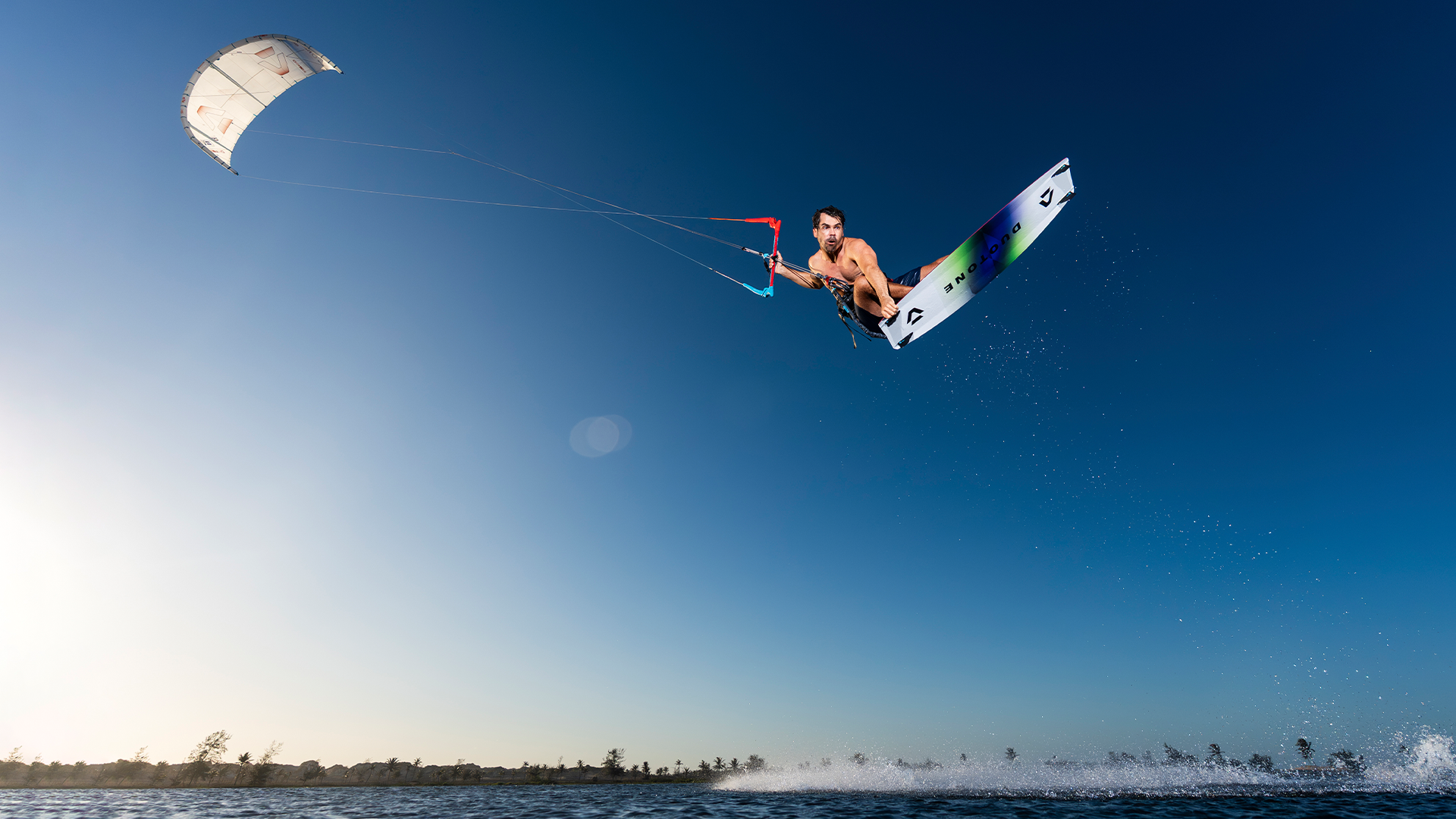
The EVO SLS has always been one of Duotone’s most versatile kites, offering incredible performance, control, and accessibility across a wide range of conditions and disciplines of riding. For 2026, designer Manuel Zwinz and test rider Reno Romeu discuss the refinements to the new Evo SLS, with focus on turning initiation and a more intuitive bar feel the new Evo SLS now delivers an even more forgiving ride making it the perfect choice for a wide range of kiters.
In this discussion, they share the design decisions behind this latest edition, and why it’s shaping up to maintain its position as one of the most popular kites in the Duotone range.
:grayscale(false):quality(10):blur(20):format(webp) "DT25_Tech_Talk_Evo SLS")
:grayscale(false):quality(10):blur(20):format(webp) "Evo SLS")
Manuel Zwinz:
This is already the third version of the EVO SLS that I’m working on. Looking back, the first version was all about controlling the top end and getting the depower right. The second version introduced the six-point bridle with a slightly longer bar stroke. Now, for the third version, my main focus was turning speed. Last year’s EVO SLS was very stable, but it lacked a bit in turning speed.
:grayscale(false):quality(10):blur(20):format(webp) "Evo SLS")
To achieve this, we made two major changes. First, there’s an extra segment on the tip to improve how the steering impulse transfers into the frame and leading edge. Second, we dramatically decreased the diameter of the tip struts—they taper to a very thin profile. This allows the canopy to twist more from front to trailing edge, increasing the steering impulse and giving stronger, faster turning. Overall, this really improves the kite’s feel and steering, moving the EVO SLS in a very nice direction.
Manuel Zwinz:
As Reno said, a lot of what we learned developing the EVO D/LAB translated into the EVO SLS. There are some limitations with the SLS, especially regarding the leading edge diameter—it can’t be as high pressure or as small as the D/LAB. But it also has advantages for intermediate kiters: the thicker leading edge positions the kite deeper in the wind window, giving a better sheet-and-go, which is great for beginners.
:grayscale(false):quality(10):blur(20):format(webp) "DTK-Duotone-ManuZwinz-testTrip-CapeTown-TobyBromwich-2778")
:grayscale(false):quality(10):blur(20):format(webp) "Manu profile pic")
»You’ll feel a lot of the D/LAB DNA in the SLS, especially in bar responsiveness. You only lose a little at the very top end of performance, where the D/LAB’s smaller, more rigid leading edge has the edge. Overall, it’s a playful, smooth, well-balanced kite—great for jumping, nice for looping. I’m personally very happy with this package.«
:grayscale(false):quality(10):blur(20):format(webp) "Evo SLS")
Reno Romeu:
Yes, I’m very happy too. This is a kite I would suggest for everyone—from riders who just finished their course and want a kite that will grow with them over a year or two, to lighter riders looking for something forgiving and easy on the bar, to me when I want to push my limits. The EVO SLS is the perfect choice.
Reno Romeu:
I was recently on a kite trip, riding the Juice D/LAB 14-meter with a foil. I’m not exactly sure how many knots there were, but the water was glassy—it was the lightest session I’ve ever kited in. I started in conditions where I wasn’t even sure if I could ride. The wind kept dropping, and I remember looking at the water thinking, “There’s no way I can still kite.” But I just kept going—it was really impressive. It’s the same feeling I had going from the previous Evo D/LAB to the new one. We used to have a lot of power in both kites, which is good for light wind because you need something to pull you. But now, thanks to the lower aspect ratio and thinner leading edge, you get even more performance, especially upwind.
:grayscale(false):quality(10):blur(20):format(webp) "Evo SLS")